
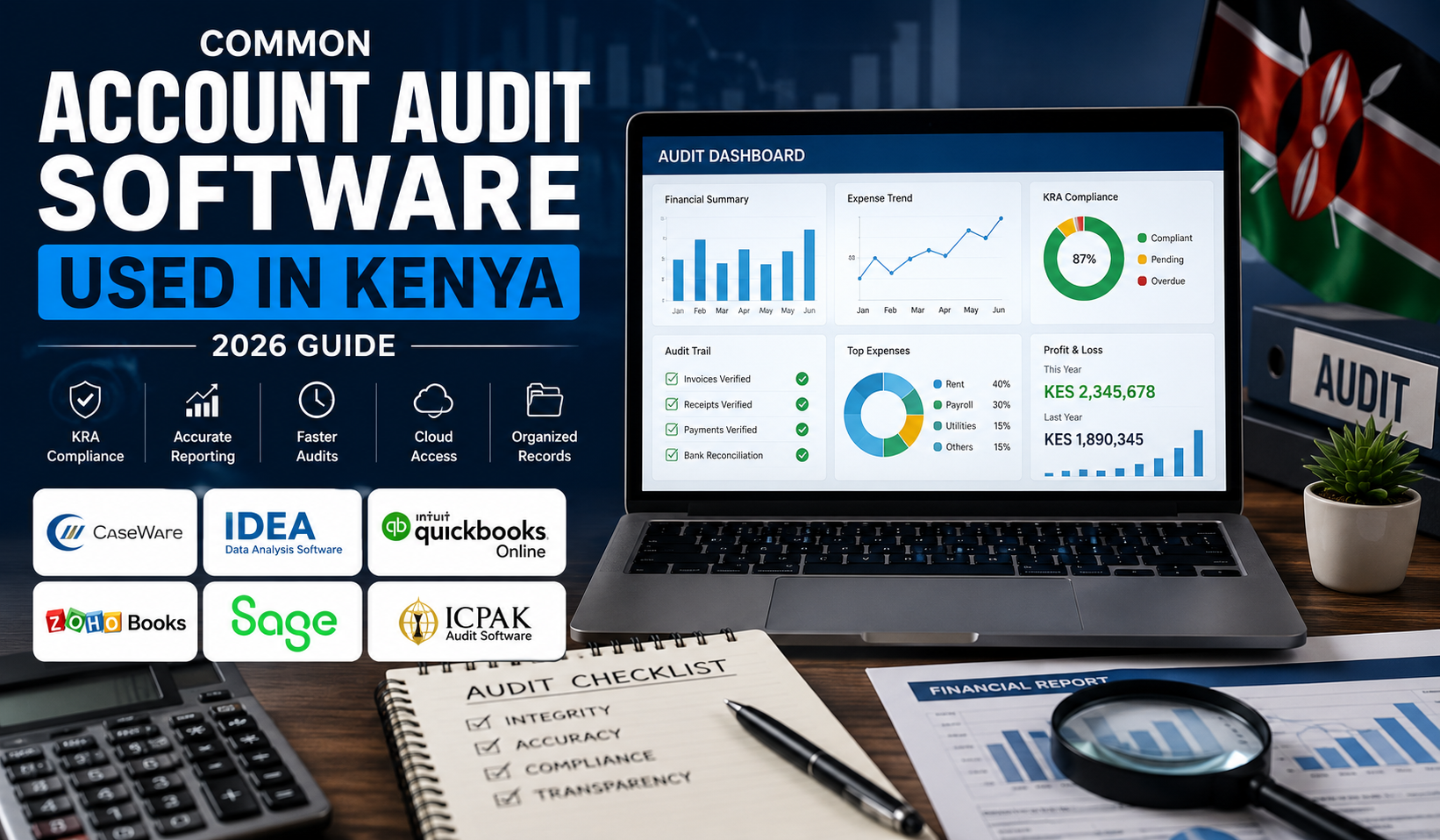
Accounting in Kenya has changed lots inside the previous few years. If we talk about common account audit software used in Kenya, it becomes smooth that corporations aren’t depending on guide books or simple spreadsheets like earlier than. Things have moved toward digital systems which can be quicker, extra accurate, and lots less difficult to control.
But now? It’s different. Most companies, even small ones, are moving toward digital audit and accounting software. It just makes life easier, reduces mistakes, and helps with compliance—especially with KRA rules and reporting.
In this guide, we’ll go through the common account audit software used in Kenya, how they are used in real situations, and what makes each one useful.
Nothing complicated here. Just simple, practical understanding.
Why Audit Software Matters in Kenya Today.
Running a business in Kenya without proper audit tools can get messy quickly. Taxes, invoices, receipts, payroll… everything needs to be tracked properly.
That’s where audit software steps in.
Some key reasons businesses use it:
- Helps with KRA tax compliance (very important)
- Reduces human mistakes in accounting records
- Makes audits faster and less stressful
- Keeps financial data organized in one place
- Improves transparency in business operations
- Allows remote access (especially cloud systems)
- Saves time during reporting seasons
And honestly, once a business switches to software, going back to manual work feels almost impossible.
Common Account Audit Software Used in Kenya
Now let’s break down the most commonly used tools in Kenya. These are not random names — these are actually used by audit firms, SMEs, and corporate companies.
1. CaseWare (Very Popular in Audit Firms)
CaseWare is widely used by professional auditors in Kenya.
It’s not really a basic accounting tool. It’s more like a full audit working system.
What it does:
- Organizes audit working papers
- Helps prepare financial statements
- Supports structured audit workflows
- Ensures compliance with audit standards
Why auditors like it:
- It saves a lot of time during audits
- Everything is structured properly
- Makes collaboration between audit teams easier
Best for:
- Audit firms
- Professional accountants
- Large corporate audits
To be honest, beginners might find it a bit heavy at first. It’s powerful, but not exactly “simple.”
2. IDEA Data Analysis Software
IDEA is more of a data analysis tool used in auditing.
If CaseWare is about organizing audits, IDEA is about digging into data and finding problems.
What it does:
- Analyzes large financial data sets
- Detects fraud or unusual transactions
- Helps in forensic auditing
- Identifies duplicates or missing records
Where it is used:
- Government audits
- Fraud investigations
- Large corporations with big datasets
It’s a bit technical, yes. But very powerful when used correctly.
3. QuickBooks Online (Very Common for SMEs)
QuickBooks is probably one of the maximum broadly used accounting gear in Kenya.
Small businesses love it because it’s simple.
Features:
- Easy income and expense tracking
- Invoice creation
- Basic financial reports
- Cloud access from anywhere
- Simple audit trail
Why people use it:
- Easy to understand
- Doesn’t require deep accounting knowledge
- Works well for small businesses
Best for:
- SMEs
- Freelancers
- Startups
It’s not a full audit system like CaseWare, but for daily accounting, it’s solid.
4. Zoho Books (Growing Fast in Kenya)
Zoho Books is becoming more popular in Kenya, especially among digital businesses.
It’s affordable and quite modern.
Features:
- Automated invoicing
- Bank reconciliation
- KRA/eTIMS integration support
- Real-time reporting
- Expense tracking
Why businesses like it:
- Clean interface
- Cloud-based access
- Affordable pricing
- Good automation features
Best for:
- Online businesses
- SMEs
- Growing companies
It feels more “modern” compared to older accounting tools.
5. Sage Accounting (Used by Medium & Large Businesses)
Sage is a strong, well-established accounting system.
Many medium and large companies in Kenya rely on it.
Features:
- Advanced financial reporting
- Payroll management
- Tax compliance tools
- Strong audit trails
- Inventory tracking (in some versions)
Best for:
- Medium enterprises
- Manufacturing companies
- Large organizations
It’s powerful, but now not always newbie-pleasant.
6. ICPAK Audit Software (Local Professional Tool)
This one is specifically designed for auditors in Kenya under ICPAK guidelines.
Features:
- Supports IFRS for SMEs
- Structured audit documentation
- Secure file management
- Built for Kenyan audit standards
Best for:
- Certified public accountants
- Audit trainees
- Professional audit firms
It’s more local-focused as compared to worldwide tools.
Quick Comparison Table
| Software | Main Use | Ease of Use | Best For |
|---|---|---|---|
| CaseWare | Full audit management | Medium | Audit firms |
| IDEA | Data analysis & fraud detection | Hard | Large audits |
| QuickBooks | Basic accounting | Easy | Small businesses |
| Zoho Books | Automated accounting | Easy | SMEs & online businesses |
| Sage | Advanced finance system | Medium | Large companies |
| ICPAK Software | Local audit compliance | Medium | Professional auditors |
How Businesses in Kenya Choose Audit Software
In real life, most businesses don’t just pick software randomly. They usually go through a simple decision process.
1: Business size
- Small business → QuickBooks, Zoho Books
- Medium business → Sage, Zoho Books
- Large company → CaseWare, Sage
2: Compliance needs
They check if the software supports:
- VAT reporting
- PAYE calculations
- KRA systems (like eTIMS)
3: Ease of use
Some business prefer simple tools even supposing they’re less powerful.
4: Budget
This is a big one. Some tools are subscription-based, others are expensive enterprise systems.
Benefits of Using Audit Software in Kenya
Let’s keep it simple. The benefits are pretty clear:
- Faster audits and reporting
- Less human error
- Better financial control
- Easy tax compliance
- Organized records
- Better decision-making
- Remote access to data
Once businesses get used to it, manual systems feel outdated.
Challenges Businesses Still Face
Of course, it’s not all perfect.
Some common issues include:
- Some software is expensive
- Training staff takes time
- Internet dependency (for cloud tools)
- Integration with local systems can be tricky
- Not all employees adapt quickly
So yeah, adoption takes time.
FAQs
1. What is the most commonly used audit software in Kenya?
CaseWare, QuickBooks, Zoho Books, and Sage are broadly used.
2. Can small businesses use audit software?
Yes, honestly. In fact, gear like QuickBooks and Zoho Books are made for them.
3. Which software is best for KRA compliance?
Zoho Books and Sage are commonly used for tax compliance.
4. Is audit software hard to learn?
Some are easy (like QuickBooks), while others like CaseWare take time.
5. Do audit firms in Kenya use international software?
Yes, most professional firms use tools like CaseWare and IDEA.
Conclusion
Audit software in Kenya is no longer optional. It’s becoming a basic need for businesses that want accuracy, compliance, and efficiency.
Whether it’s a small startup or a large audit firm, there is always a tool that fits the need. Some are simple, some are advanced—but all of them help reduce stress in financial management.
So when we talk about common account audit software program used in Kenya, we are truly speaking approximately tools which might be shaping how corporations deal with money these days.
And actually, this trend is handiest going to grow more inside the coming years.